Why are updates necessary and why are they paid?
A-Parser is constantly evolving. With the release of new versions, improvements and fixes are introduced. In this article, we will examine what updates are, how they differ from the license, what role they play, and why they require payment.
License ≠ updates
When purchasing A-Parser, you receive a perpetual license for its use and 3-6 months of free updates depending on the purchased license. After the free update period ends, you can update to the latest available stable version and continue using the scraper in full — to the extent allowed by the version available at the time your subscription expired.
To renew your subscription, you can purchase one of three update packages: for 3 months, one year, and lifetime for $49, $149, and $399 respectively.
You do not need to pay for updates constantly. There is no need to pay for the period during which there was no update subscription.
Why are updates paid?
🐞 Bug fixes
Websites and various types of resources evolve quite rapidly. Any, even the most insignificant changes on the target site's side can affect scraping. This happens because scrapers are initially tailored to a specific structure, and changes in layout, protection, or other various internal mechanics lead to incorrect data in results, their complete absence, and other errors. Scraping itself negatively affects servers allocated for websites: requests and, accordingly, the load grow. Services losing profit are forced to find a way out of this situation, which leads to the appearance of new types of protection and the development of old ones.
With each such change, it is necessary to make adjustments. Behind each one is a problem analysis, search for a solution, and its implementation.
🧰 Every day, each built-in scraper undergoes a system of internal tests. If the test queries are completed successfully, the resulting values are checked. A failed test signals errors present in the scraper. Thanks to tests, we respond promptly to breakages and immediately start working on their correction.
Some of the most complex, in-demand, and therefore priority scrapers for us are the Yandex and Google search engine scrapers. Each consists of many parts solving a specific task. Among them are query preparation, header formation, obtaining the page source code, various result formatting, working with captcha, etc. All this must be maintained in working condition. The scraper provides for the presence of variables containing all necessary data from the page: search results, advertisements, related keywords, and other values. They are extracted using regular expressions that assume a certain document structure on the page (order of elements, their types, classes, and other various attributes). When this structure changes critically, the regex that fit its previous version stops extracting the required fragment, and the scraper is sent for revision.
✨ Improvements
In addition to maintaining the functionality of built-in scrapers, each version adds new features and introduces various improvements affecting both performance and the quantity of data obtained. The version includes new scrapers, and new methods are implemented in the JavaScript API.
You can view all changes here.
Issues related to missing updates
The lack of timely updates causes incorrect operation of built-in scrapers. The reasons can be different. For example, the page layout might have changed. A scraper that has not received an update tries to collect data using old regular expressions not adapted to the new format. As a result, failed requests appear, various errors pop up, and there is no result.
Google scraper example
A user contacted support with the following problem:
I am collecting Google search results with your proxies. 300 retries are set for the query. All queries end up as failed. Everything was working yesterday.
At first glance, it seems the problem is with the proxies, but tests with identical settings and queries on the latest version work successfully. This means the problem lies elsewhere. During the dialogue, it turns out that the user has an outdated version of A-Parser. This is the real reason for the incorrect operation of the Google scraper.
Yandex scraper example
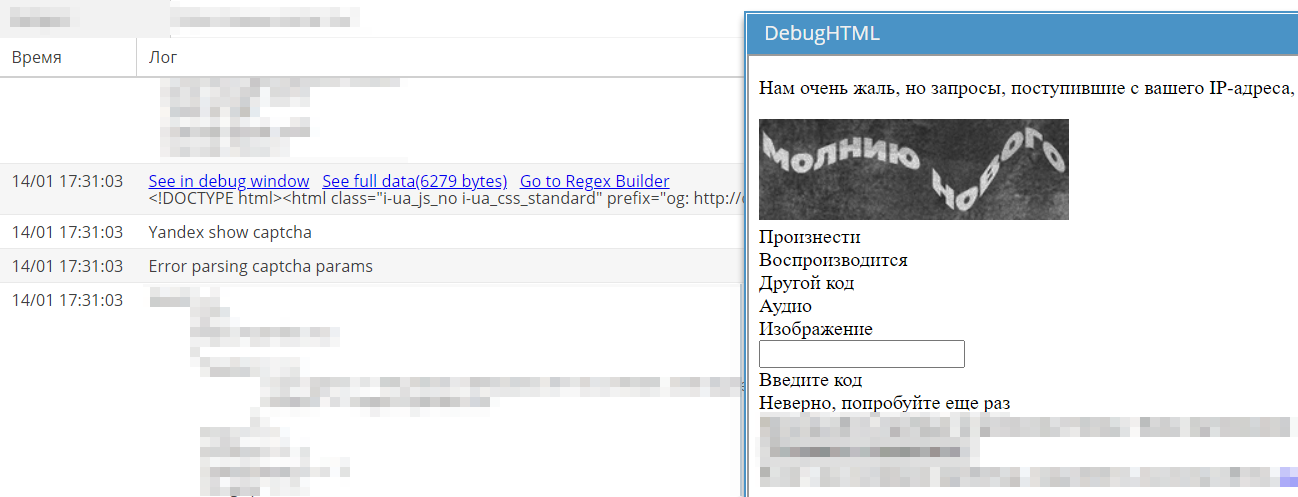
In Yandex, the layout of pages with captcha changed, which is why it stopped being solved. A corresponding thread was created on the forum in the Tasks section.
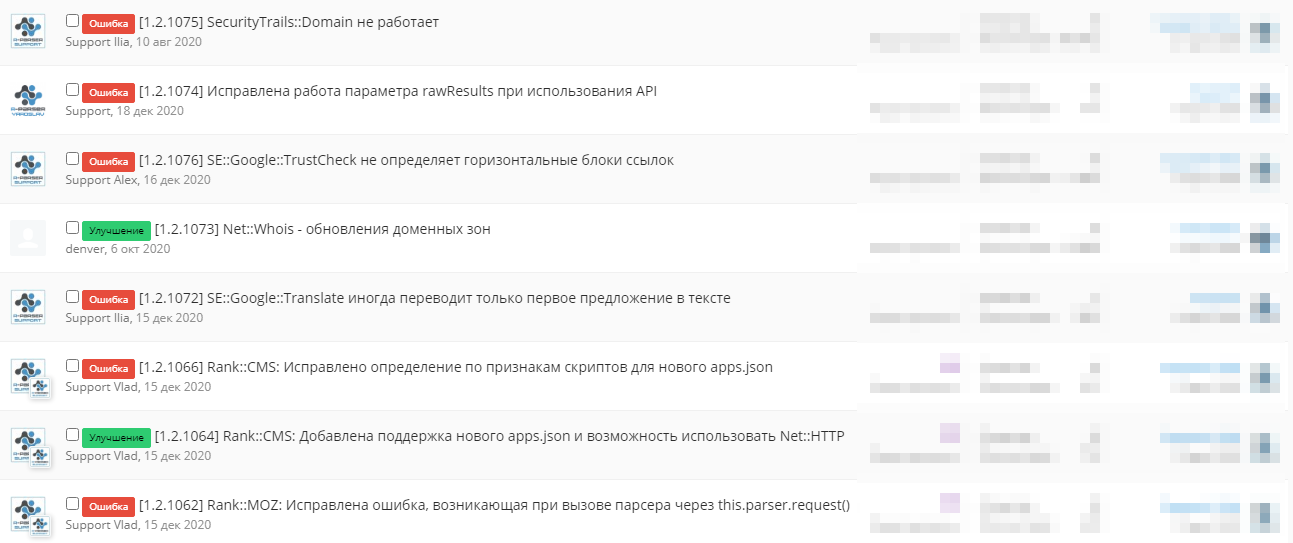
The fix was released the next morning. The task was closed and moved to the Next release section. This section contains threads for all fixes and improvements that will be included in the next stable version.
Accordingly, in an A-Parser that did not receive the fresh update, the captcha in Yandex was no longer solved.
Conclusion
When purchasing A-Parser, you receive a perpetual license to use the program and a package of free updates for a certain period. If necessary, after the subscription expires, you can renew it by purchasing one of the offered update packages.
Websites are unstable — scrapers require constant adjustments and improvements. Maintaining their working condition is our job. A priority task to which we devote great effort to release working fixes as quickly as possible. The cost of updates justifies the labor behind them. Each version is not just a list of fixes and improvements — it is months of focused work by the A-Parser team.